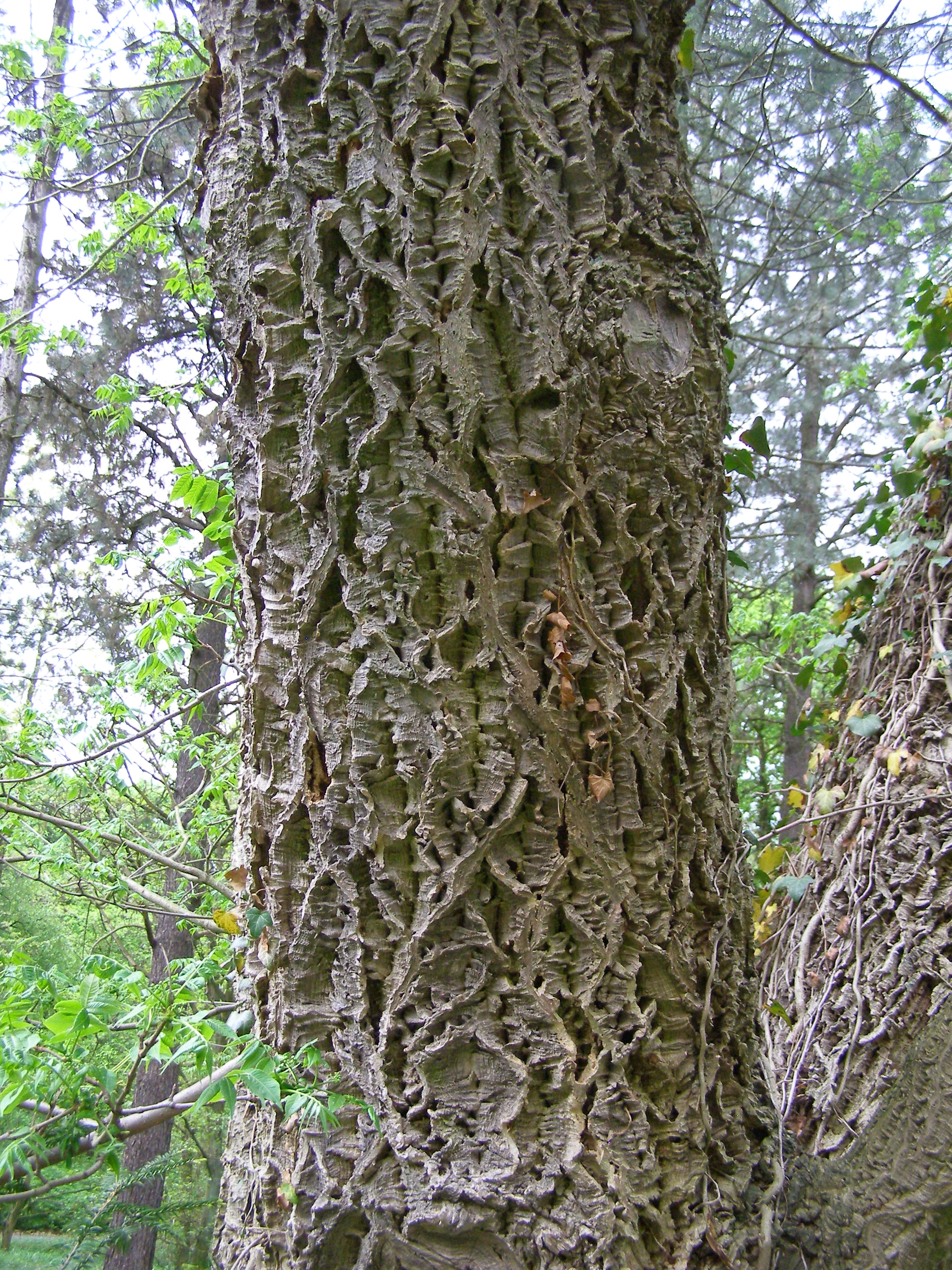
The Cold Spring Loop Trail will close for several days sometime in July or August, as contractors remove large invasive Amur cork trees that have quietly taken over part of the park's wetland forest — all traced back to just four ornamental trees planted in the cemetery across Beacon Street.
The Amur cork tree, native to East Asia, was originally planted for its looks. Since then, it's spread through the park's wetland red maple forest, with the largest colony in the wetland's heart now numbering more than 200 stems. Left alone, the tree could grow from less than 5% of the park's canopy to a third or more within a few decades, according to a conservation plan from consultant Zach Shein and Dr. Jon Regosin, a Newton Conservators director and former deputy director of the Massachusetts Division of Fisheries and Wildlife.
Amur cork trees cast heavy shade that chokes out native plants, and their roots release berberine, a natural herbicide that kills understory growth beneath them. Unlike native oaks and maples, which support hundreds of caterpillar species that birds depend on, Amur cork trees offer little real value to wildlife — their berries attract birds but provide poor nutrition compared to native fruit, undercutting the park's role as habitat for the more than 150 bird species recorded there.
"The tree thrives in sun and shade, and in moist or dry soil," said Alan Nogee, president of the Friends of Cold Spring Park and a Newton Conservators director — exactly the kind of adaptability that's let it spread so far, so fast. Massachusetts has banned the sale, import and propagation of the species since 2006.
Friends of Cold Spring Park and Newton Conservators have committed at least $25,000 to hire the city's forestry contractor for this phase, with no city funds involved. Both the Newton Conservation Commission and the state Department of Environmental Protection have approved the removal plan.
Volunteers have removed more than 150 smaller Amur cork trees with city approval, but the larger ones near the trail need professional equipment. Since cutting alone triggers regrowth, licensed applicators will dab small amounts of herbicide directly onto the stumps. Trees marked with an "X" in the park are slated for removal, and new native trees will be planted in the largest gaps left behind.
The groups applied for a state biodiversity grant but didn't receive one — competition was steep, with more than 200 organizations applying for only about a dozen awards — so additional fundraising is planned to keep the project going.
Exact closure dates haven't been announced yet, but residents should watch for posted notices sometime in July or August. The closure is part of a broader conservation plan for the park that also includes replanting native species in the cleared areas.