Rabbi Daniel Klein wants Newton's Jewish community to think about what it means to say yes to the world 100 times a day.
Klein, dean of the Rabbinical School at Hebrew College at 1860 Washington St., published a Torah commentary on Monday, Aug. 10, exploring how the ancient Jewish practice of reciting at least 100 blessings daily can reshape the way people perceive and engage with the world around them. The piece arrives as the Jewish month of Elul begins Thursday night, Aug. 13, opening a 30-day period of spiritual preparation before Rosh Hashanah, which starts at sundown on Friday, Sept. 11.
Klein, who grew up in Newton and has been part of the Hebrew College community for more than 20 years, anchors his commentary in Parashat Shoftim, the weekly Torah portion read on Saturday, Aug. 15. He draws on a 17th-century text by Rabbi Isaiah HaLevi Horowitz that associates the "gates of the town" in Deuteronomy with the "seven gateways to the soul," or the senses of perception. The Baal Shem Tov, the 18th-century mystic who inspired the Chasidic movement, taught that the same verse instructs people to place "love and awe in all our gates, in all our thoughts."
The number 100 is not arbitrary. Jewish tradition instructs observant Jews to recite at least that many blessings each day, and the Talmud teaches that to benefit from the world without making a blessing is tantamount to desecrating something sacred. Klein writes that the practice is both "descriptive of a life in service of seeing and bringing out blessing" and "prescriptive for how to embody this in our lives."
Klein opens the essay with a story about John Lennon attending a 1966 London art exhibit by Yoko Ono, where Lennon climbed a ladder and peered through a magnifying glass at a tiny word painted on the ceiling: "Yes." Klein uses the anecdote as a metaphor for what he calls Jewish tradition's "pulsating sense of 'Yes'" animating existence.
He also quotes his colleague Rabbi Nehemia Polen, professor of Jewish Thought at Hebrew College, from Polen's essay "Touches of Intimacy" in the book A New Hasidism: Branches. On the meaning of the Priestly Blessing, Polen writes: "Essentially what it promises is divine grace, the gift of God's loving appreciation and beaming gaze. When I sense that God is smiling at me, what else needs to be said?"
Klein lives in Newton with his wife Jen and their two children, Micah and Nora. He attended Hebrew College's Prozdor Hebrew High School as a teenager and was ordained there in 2010.
Upcoming High Holiday events at Hebrew College
Hebrew College's free GROW adult learning program hosts Rabbi Or Rose online on Wednesday, Aug. 12, for a session titled "Seeing God's Shelter: Psalm 27 & Preparing for the High Holy Days."
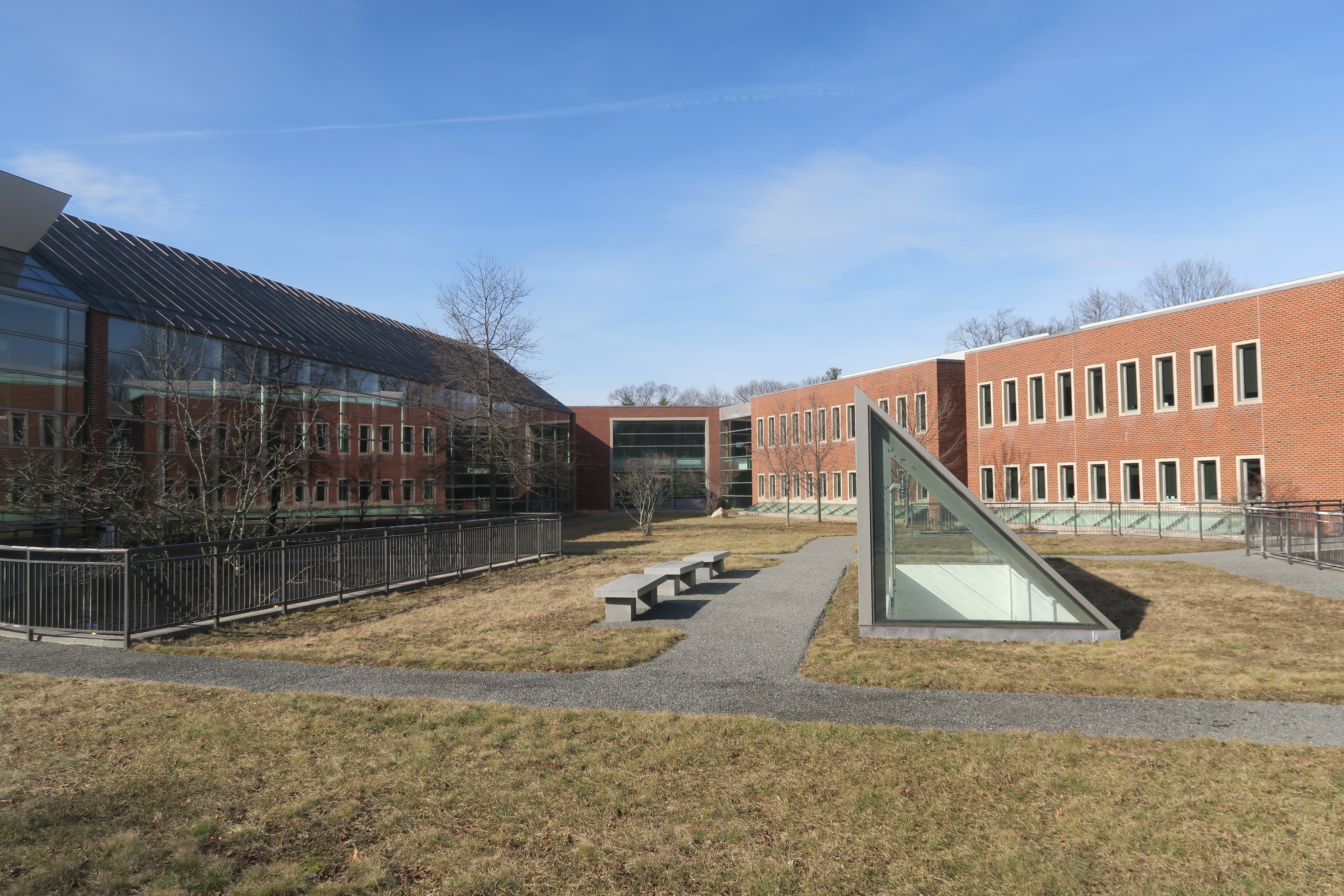
The college's Arts Initiative opens "Psalm 27: A Dialogue with Text and Art," a free exhibit featuring works by 18 artists, at the Mark E. Atkins and Family Atrium, 1860 Washington St., from Wednesday, Sept. 9, through Friday, Dec. 18. Psalm 27 is traditionally recited daily during Elul and the High Holidays.
Rosh Hashanah begins at sundown on Friday, Sept. 11, and ends at nightfall on Sunday, Sept. 13. Yom Kippur falls on Sunday, Sept. 20, through Monday, Sept. 21.