A Seattle-based company wants Newton residents to pay for what their curbside bins can't handle — and not everyone thinks that's a good idea.
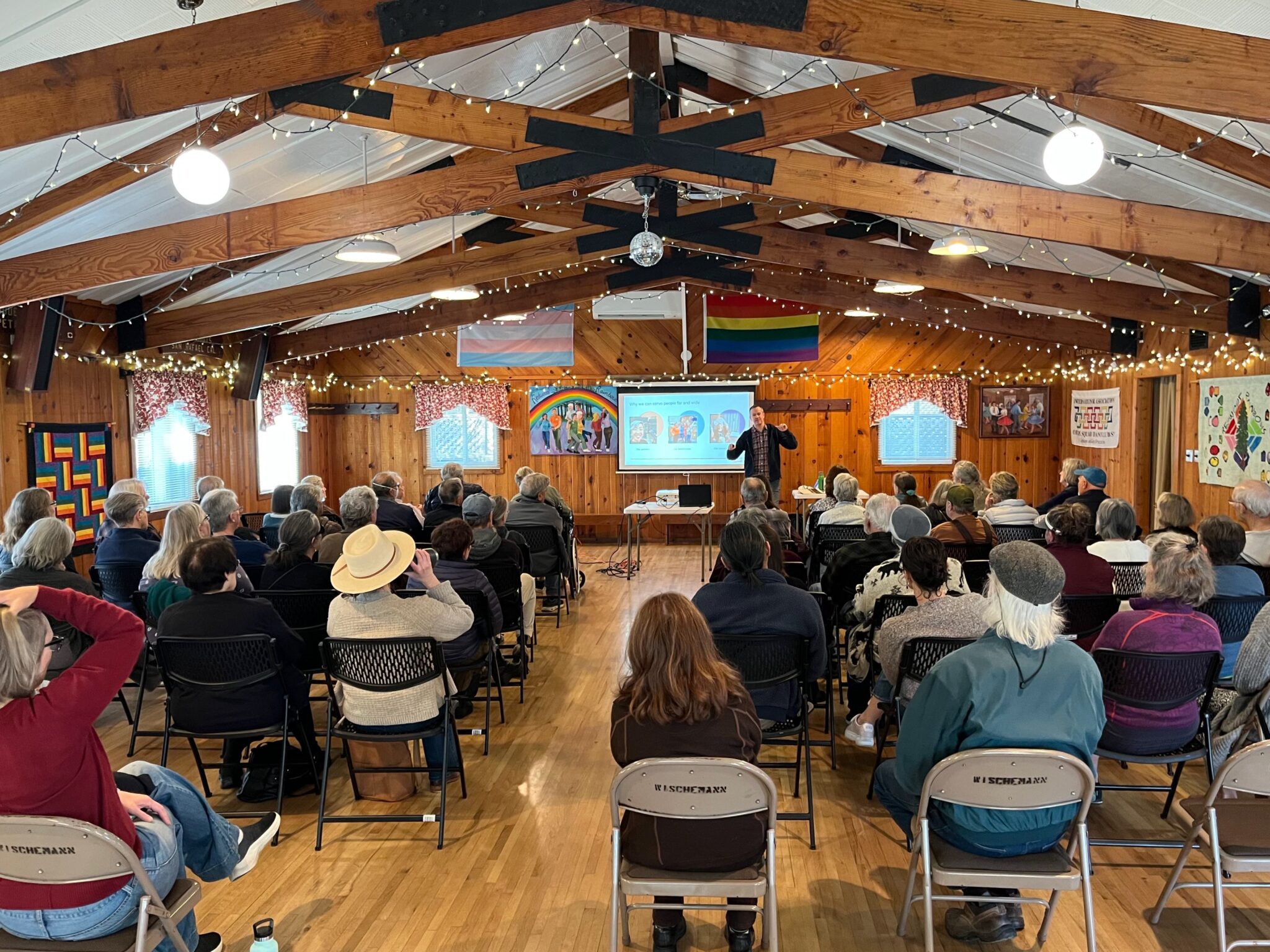
Ridwell, a subscription recycling service that accepts hard-to-recycle plastics like film wrap, multilayer packaging, and bottle caps, drew a crowd to the Newton Free Library on Monday, July 13, 2026, for a presentation on its mail-back program. The company already counts roughly 100 Newton households among its 2,300 Greater Boston subscribers, according to co-founder and CEO Ryan Metzger.
The pitch: for $30, residents get a starter kit with two postage-prepaid bags. Replacement bags run $9 to $12 depending on the material. If Greater Boston membership hits 3,000, Ridwell says it would shift to curbside pickup at $20 per month.
"We're entirely complementary to municipal recycling programs," Metzger told attendees. "Ridwell focuses on the materials that don't work in that system."
Newton's municipal recycling does not accept plastic bags, wrap, or air pillows, according to the city's climate dashboard. The city directs residents to retail drop-off bins or specialty programs for those items.
Metzger founded Ridwell after difficult-to-dispose items piled up in his family's Seattle basement. Weekend recycling trips with his young son grew into a neighborhood collection effort, then a company. Ridwell now operates in 11 warehouse regions across the U.S. and Canada, works with about 350 recycling and reuse partners, and claims to have diverted nearly 45 million pounds of material from landfills. The company says 97 percent of what it collects is recycled or reused, a figure Metzger attributed to internal warehouse audits. No independent verification of that rate is publicly available.
Critics call it greenwashing
Not everyone in the room was sold. Eileen Ryan, volunteer leader of Beyond Plastics Greater Boston, argued that Ridwell gives consumers false confidence that plastic waste can be managed through recycling rather than reduction.
"There is no way to effectively recycle plastic films, wrappers, chip bags, polystyrene clamshells and the whole host of plastics that Ridwell collects," Ryan said at the event, as reported by local outlet Fig City News. "Telling people they can pay to have this plastic recycled is greenwashing."
Ryan contends that many plastics marketed as recyclable are instead "downcycled" into products like composite lumber, delaying rather than preventing their disposal while sustaining demand for new plastic production. Beyond Plastics published a fact sheet in January 2026 arguing that mail-back recycling hastens climate change and consumes more resources than it saves.
A local alternative already exists
Shara Ertel, owner of Fulfilled Goods, a low-waste refill store in Newtonville with a second location in Newton Center, offers her own hard-to-recycle collection for $5 per grocery bag, partially subsidized by a City of Newton and Village Bank Climate Action Microgrant. Ertel acknowledged the tension.
"I think for a consumer, once you have it, the question becomes: Is it better to put it in the landfill or is it better to try to find another use for it?" Ertel said. "That's where it becomes a gray area."
Newton resident Steve Gordon, a Ridwell subscriber since September 2025, said he estimated that about 90 percent of his hard-to-recycle waste was multilayer plastic that Newton's services couldn't process. He said the company tells him where each material goes and what it becomes.
Ridwell has not announced a specific timeline for curbside service in Newton. The company's 3,000-member threshold for Greater Boston remains its stated benchmark for that transition.