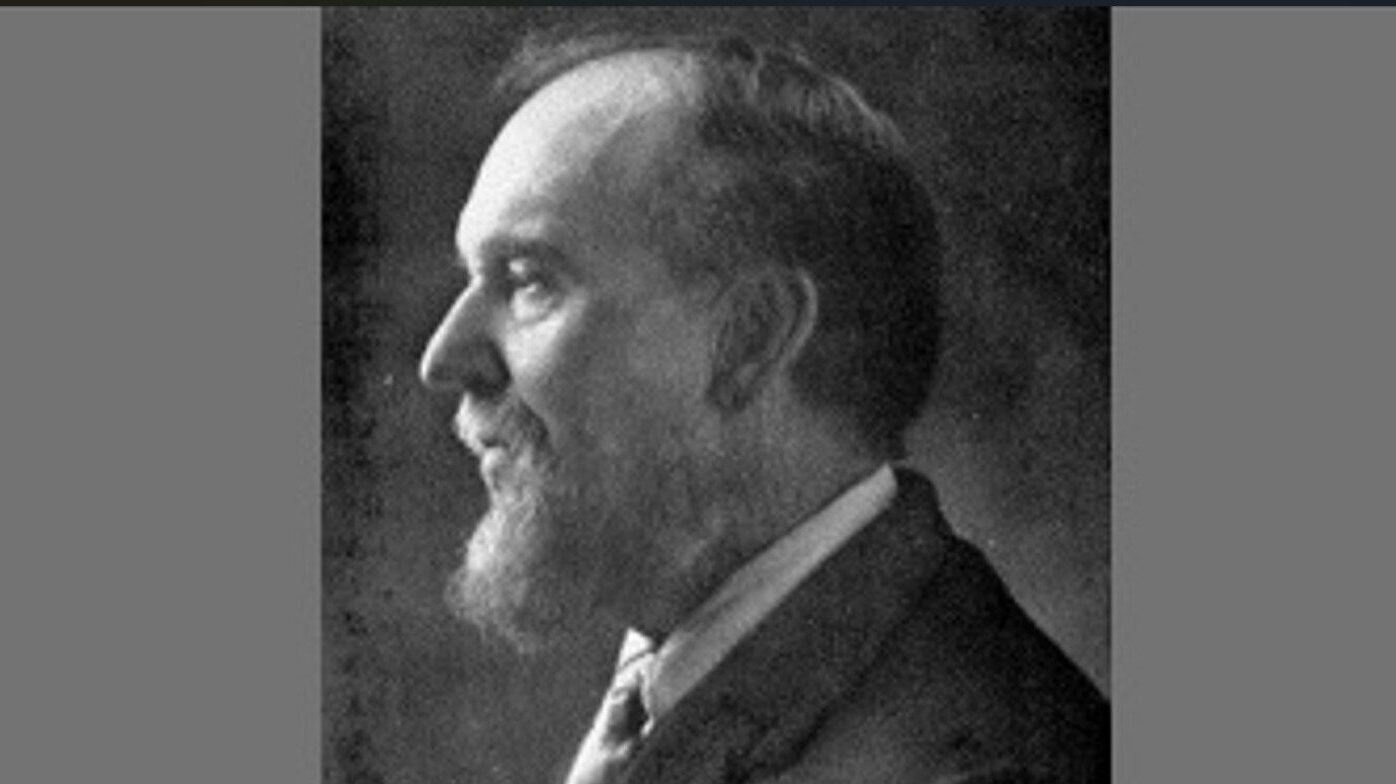
Charles Johnson Maynard left school at 16 to work his family's West Newton farm. By the time he died in 1929, he had discovered new species across the Caribbean, corresponded with Charles Darwin, and built a Newtonville taxidermy shop that drew collectors from up and down the East Coast.
A detailed profile published July 20 by the Newton Beacon traces how Maynard, born May 6, 1845, became one of the most prolific naturalists of his era without ever earning a college degree.
From farm boy to taxidermist
Maynard lost his father at 12 and his eldest brother soon after. He tried factory work at the Waltham Watch Company but couldn't stay.
"My innate desire to investigate the mysteries of nature was too strong to allow me to settle down to farming," he wrote.
Taxidermy gave him a livelihood. His Newtonville shop drew collectors from across the Eastern Seaboard and supplied specimens to Harvard's Museum of Comparative Zoology, located nearby. By 21, he was earning his living selling bird skins and natural objects, according to the Linda Hall Library's profile of Maynard.
A self-taught publisher
In 1870, at age 24, Maynard published his Naturalist's Guide. Wikipedia describes it as America's first publication offering a reliable and detailed method of collecting and preserving zoological specimens. He ran his own publishing house from his Newton shop, setting type, engraving figures, cutting wood blocks, hand-coloring prints, and binding volumes himself.
He was a founding member of the Nuttall Ornithological Club in 1873, which the club's own records call the first ornithological organization in North America. He co-edited its Bulletin in 1876, the country's first ornithological journal. But after one issue, club members removed him as editor. The stated reason: he had left for a collecting trip to the Bahamas instead of meeting the publication schedule. Harvard alumnus Joel Asaph Allen replaced him.
That dispute likely cost Maynard membership in the American Ornithologists' Union when it formed in 1883. Joseph Marshall Wade, editor of the Ornithologist and Oologist, defended Maynard at the time, saying he studied birds while the other ornithologists were "toddling around in petticoats."
Caribbean adventures and Darwin
In 1888, Maynard hitched a ride on a schooner from Kingston, Jamaica, to Grand Cayman, convinced the captain to drop him at Cayman Brac, and somehow reached Little Cayman. There he became the first person to describe the Cerion nanus snail, which the Newton Beacon reports scientists have called the rarest snail in the world. He also first described the dusky seaside sparrow in Florida, a species that later went extinct.
Darwin cited Maynard's work on the mud turtle in The Descent of Man (1872). The two naturalists exchanged letters, according to Maynard's Wikipedia entry, though details of the correspondence have not survived in accessible archives.
Newton educator
Back home, Maynard revitalized the Newton Natural History Society, shifting it toward education. He lent specimens to local teachers, led bird walks in Newton, Ipswich, and Plum Island for a small fee, and mentored young naturalists including Newton High School student Glover Merrill Allen, who went on to become curator of mammals at Harvard's Museum of Comparative Zoology.
In 1907, Maynard lamented Newton's changing landscape: "The beautiful brook has been straightened into a ditch, and most of the willows have been cut down. The golfer rolls his ball where once the meadow lark and bobolink sang."
Legacy still alive
Maynard's house at 459 Crafts Street, a Queen Anne Victorian built in 1897 on part of the original family farm, was listed on the National Register of Historic Places in 1996. Since 2003, Newton Conservators has given the annual Charles Johnson Maynard Award to recognize conservation efforts in the city. The 2026 recipient is the Native Fish Coalition, represented by Executive Director Bob Mallard, for documenting native fish and habitat conditions in Newton's streams.
Many of Maynard's books remain available at the Newton Free Library for in-library use only.