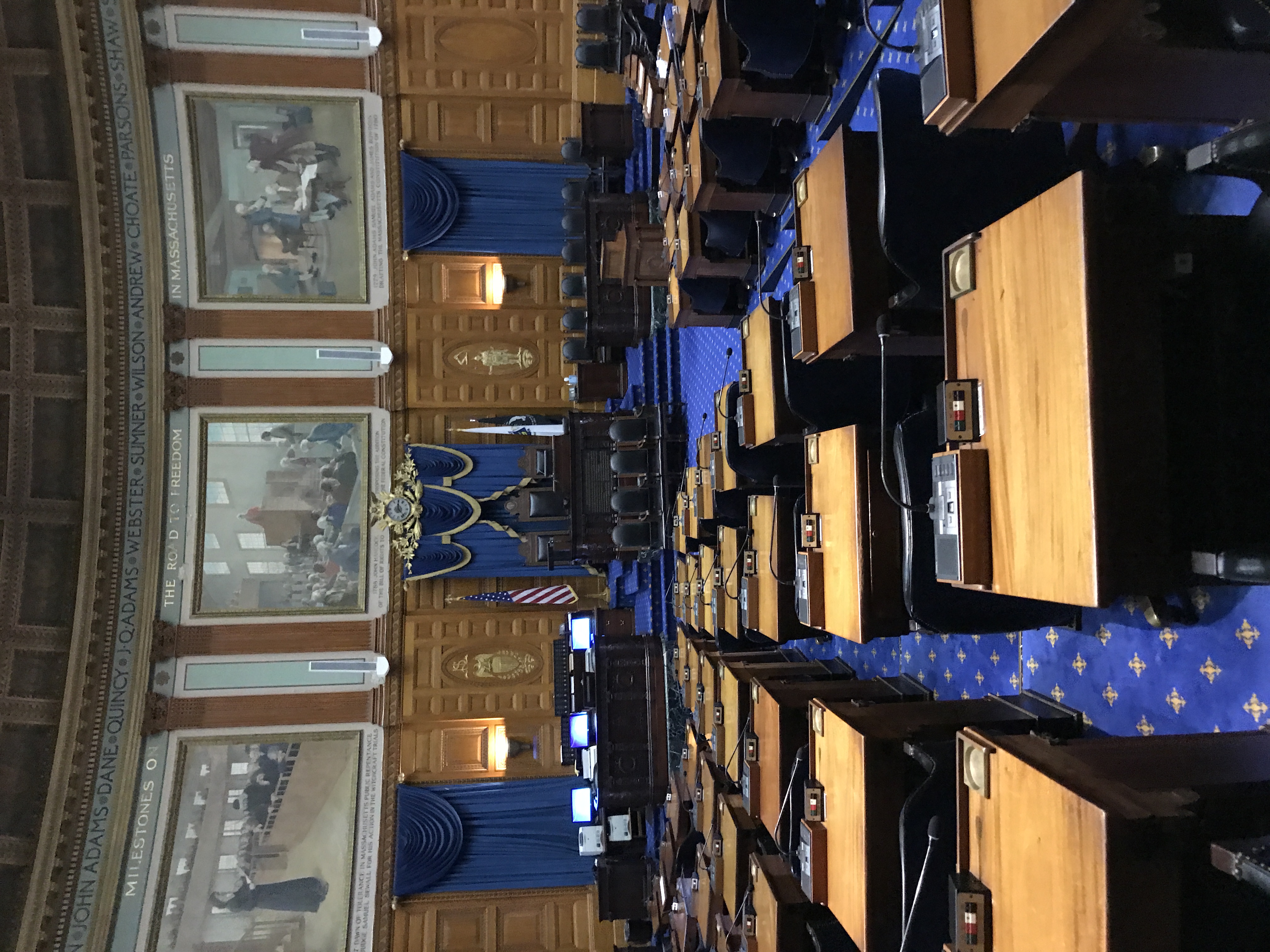
The Massachusetts House voted 156-0 on Wednesday, Aug. 5, to pass the Alzheimer's Act of 2026, a sweeping bill that would mandate dementia training for first responders, expand family notification rights and create a new MassHealth care coordination benefit for seniors.
Newton's Rep. John Lawn, who chairs the Joint Committee on Health Care Financing, helped shepherd the bill through committee hearings and stakeholder engagement over two years, according to a State House News Service report. Lawn represents the 10th Middlesex District, which includes Nonantum.
"This bill ensures patients with Alzheimer's are treated with dignity and respect, prepares hospitals and first responders to better care for people living with dementia, strengthens public awareness and education, and provides better support for caregivers," Lawn said on the House floor.
What the bill does
H 5621, sponsored by Rep. Danielle Gregoire of Marlborough, builds on a 2018 Massachusetts law and adds several new requirements:
- Dementia training: Municipal and state police officers, firefighters and EMS personnel would undergo mandatory dementia training programs.
- Family notification: Hospitals must inform families or legal representatives of an initial dementia diagnosis.
- MassHealth benefit: A new dementia care coordination benefit for eligible members enrolled in Senior Care Options and One Care plans.
- Hospital visitation: Acute care hospitals must allow medically appropriate visitation for Alzheimer's and dementia patients, including in the emergency department, without requiring caregivers to follow restricted visiting hours unless deemed unsafe.
- Ongoing hospital plans: Hospital operational plans for treating Alzheimer's and dementia patients must be updated on an ongoing basis, with the Department of Public Health reviewing them. The 2018 law required only a one-time plan.
Local and statewide impact
An estimated 135,000 people age 65 or older in Massachusetts have Alzheimer's or another form of dementia, according to the Alzheimer's Association. Another 218,000 residents serve as unpaid caregivers, providing care valued at $6.7 billion.
Katherine O'Malley, a Nonantum resident and longtime Alzheimer's advocate who watched the vote from the House gallery, praised Lawn's involvement in a letter published in the Newton Beacon. She wrote that Lawn "made an effort to remember me and my story, and he thought critically about what he could do in his role to improve his constituents' lives."
Chelsea Gordon, director of public policy and advocacy for the Alzheimer's Association Massachusetts/New Hampshire chapter, said the bill addresses what she called a "new era of Alzheimer's care," citing the arrival of disease-modifying treatments, the first blood tests for the disease and research showing lifestyle changes can reduce dementia cases.
The bill now moves to the Massachusetts Senate, where a companion bill (S 2554) filed by Sen. Adam Gomez has been in the Senate Ways and Means Committee since Dec. 18, 2025. No Senate hearing date has been announced. The bill would also need Gov. Maura Healey's signature before becoming law.
Lawn faces Newton City Councilor Alison Leary in the Tuesday, Sept. 1, Democratic primary for the 10th Middlesex seat. As we reported Wednesday, the primary includes several contested Newton races.