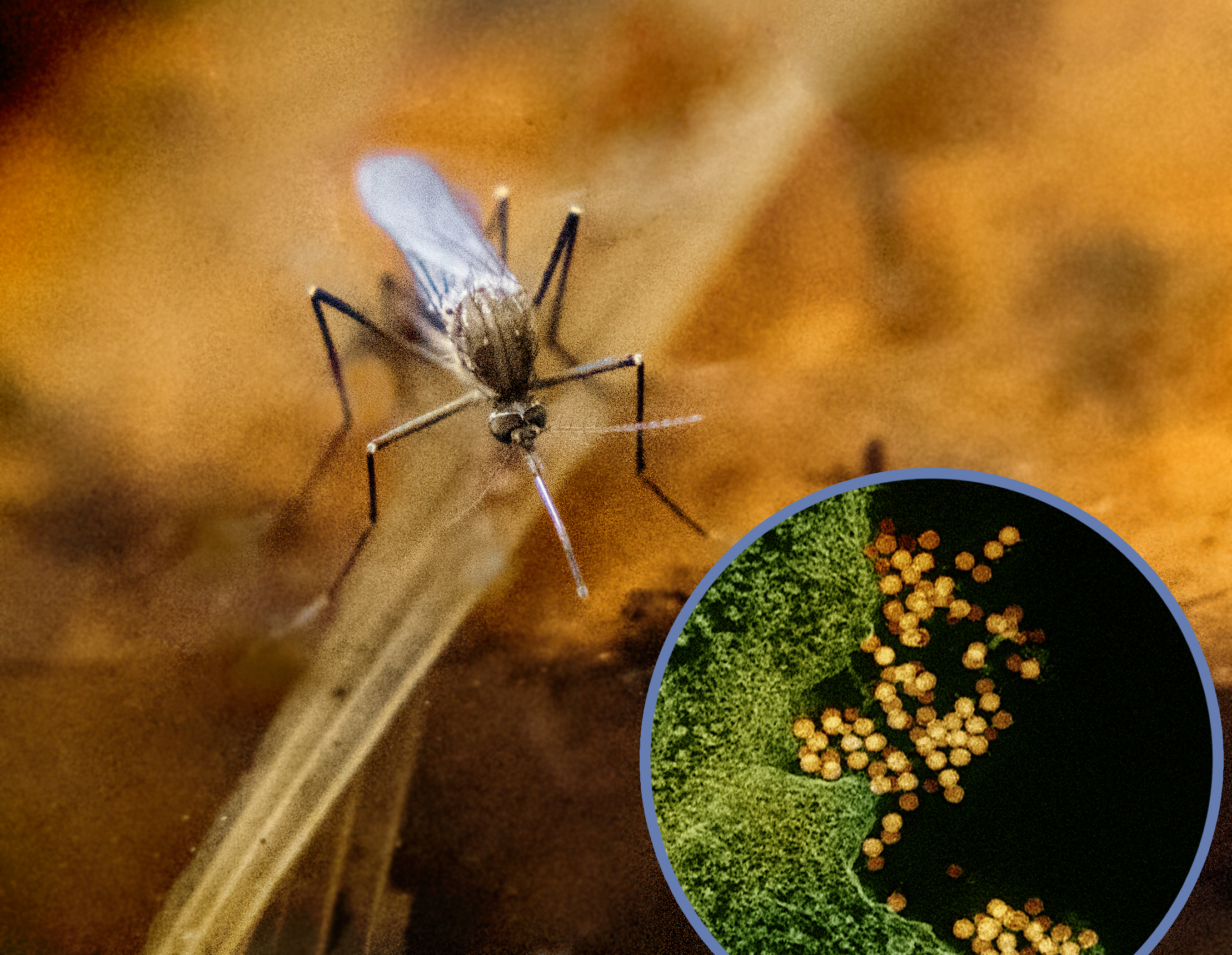
West Nile Virus has been found in Newton, and the Massachusetts Department of Public Health has designated the city's risk level as moderate — a rating that has been in place since at least July 23, according to Cape Cod Times reporting.
No human cases have been reported anywhere in Massachusetts this year. The detection appears to come from DPH's routine mosquito-pool surveillance, which has turned up 43 positive samples statewide so far in 2026.
The Newton Conservators, a local open-space advocacy group, published an alert on Thursday, July 30 urging residents to take precautions. Newton's history makes the designation worth watching: the city's WNV risk climbed to "high" by late summer in 2016, 2018, 2020, 2021, and 2025, the group noted.
Newton isn't alone. Boston, Brookline, Cambridge, Somerville, Marlborough, and several other communities also carry moderate WNV risk ratings.
In 2025, 451 of 8,788 mosquito samples tested positive statewide, and six confirmed human cases were recorded during the season.
The DPH rates community risk on a scale from "remote" to "critical." Moderate sits in the middle, but with peak mosquito activity running through August, the rating can shift quickly.
What residents should do
The DPH recommends three steps to reduce exposure:
- Use an EPA-approved insect repellent. The EPA offers an online tool at epa.gov/insect-repellents/find-repellent-right-you to help choose one based on age and activity.
- Wear long sleeves, long pants, and socks when outdoors, especially at dawn and dusk.
- Empty standing water around your property at least twice a week. Mosquitoes that carry WNV prefer to breed in man-made containers like old tires, tarps, clogged gutters, and children's toys.
EEE risk remains low
Newton's risk for Eastern Equine Encephalitis, a rarer but more dangerous mosquito-borne illness, remains at low, as does the EEE risk in all surrounding communities.
About 80% of people infected with West Nile Virus develop no symptoms, according to the CDC. Roughly 20% experience mild flu-like illness including fever, headache, and body aches. Fewer than 1% develop severe neurological disease such as encephalitis or meningitis.
Residents can check the latest community risk ratings on the DPH's arbovirus update page.