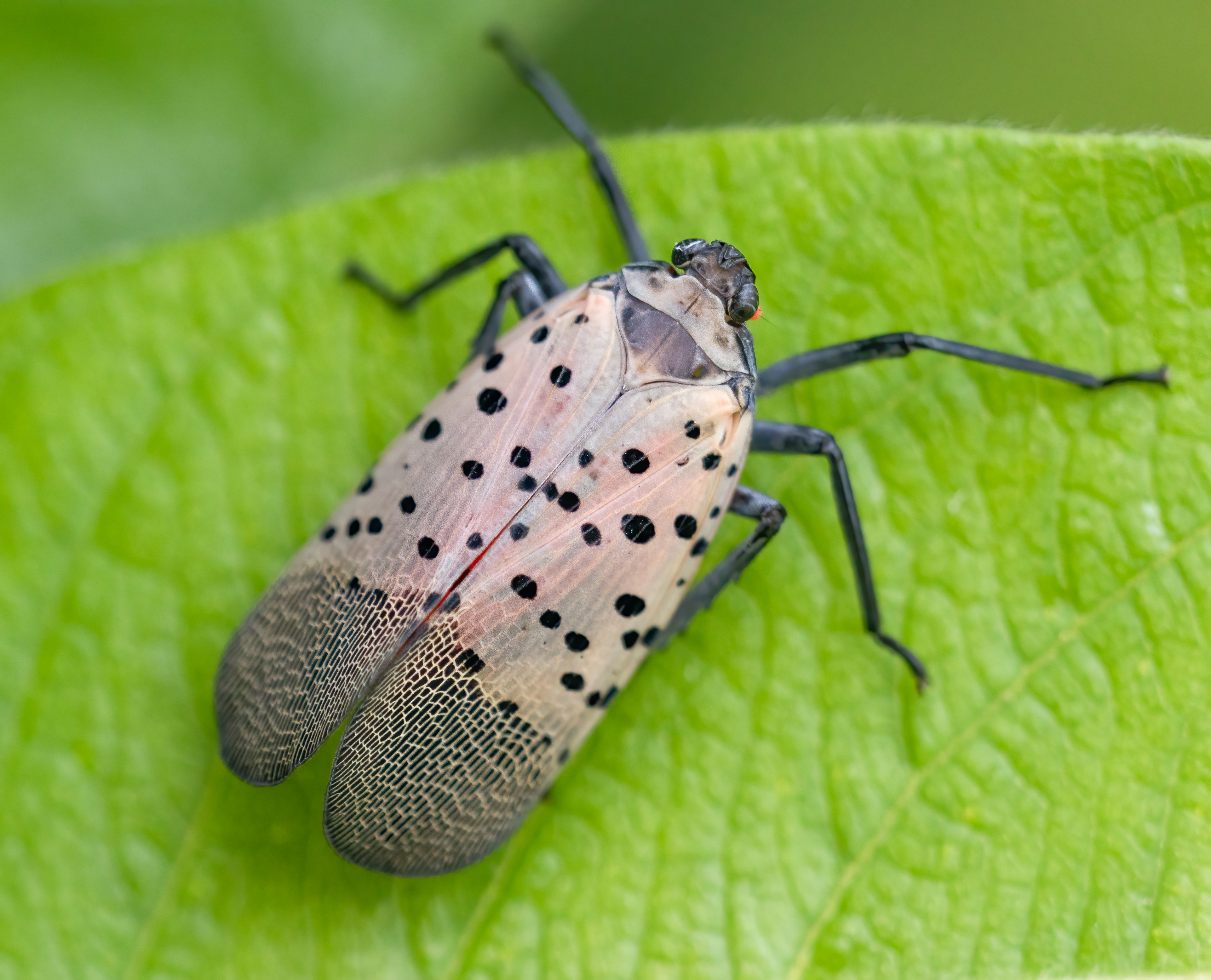
Spotted lanternflies have arrived in Newton in large numbers, and the insects are laying eggs this fall that will survive the winter if residents don't destroy them.
The invasive pests have been found clustered at Cold Spring Park and spotted individually along the Cochituate Aqueduct trail in Waban, Fig City News first reported Sunday, Sept. 20. The Newton Conservators, a local open-space group, noted the insects are killing grapes and black walnut saplings and called them a major nuisance in yards, parks and outdoor venues.
Spotted lanternflies, first detected in Pennsylvania in 2014, feed on the sap of more than 100 plant species, according to the Massachusetts Department of Agricultural Resources (MDAR). The bugs do not bite, sting or harm people or pets, according to MDAR.
They do produce a sticky substance called honeydew that coats outdoor surfaces, encourages sooty mold growth and attracts bees, wasps and ants.
The insects have spread to every region of Massachusetts except Cape Cod and the Islands, WWLP reported Sept. 9. MDAR Commissioner Ashley Randle said in a Sept. 9 statement that spotted lanternfly populations continue to expand across the state. She urged residents in active areas to inspect their vehicles before traveling to avoid spreading the insects.
What Newton residents can do
Female spotted lanternflies begin laying eggs in September. The egg masses are flat, gray, about one inch long and contain 30 to 50 eggs. They can appear on trees or any flat surface and often resemble a smear of mud.
MDAR recommends scraping egg masses off with a plastic card or putty knife, then either squishing them or placing them in a bag or container filled with rubbing alcohol or soapy water for at least 24 hours. Adult insects can be killed by squishing them. Some experts advise approaching from the front, because the bugs tend to jump forward when startled.
Because Newton sightings have already been recorded with the state, reporting additional sightings within the city is optional. Residents who find spotted lanternflies in areas not previously designated as infested should report them at massnrc.org/pests/slfreport.aspx.
The Newton Conservators have featured a webinar on spotted lanternfly management with Elizabeth Barnes, MDAR's Forest Pest Outreach Coordinator. No upcoming Newton community events related to spotted lanternfly removal have been announced.